
Riding on a bull run, equity investors became richer by Rs 128.77 lakh crore in the 2023-24 fiscal, driven by robust fundamentals of the Indian economy, increased investment inflows and promising corporate earnings. After a muted performance in 2022-23, equity markets made a remarkable recovery in FY24, giving handsome returns to investors. The 30-share BSE Sensex climbed 14,659.83 points or 24.85 per cent in 2023-24.
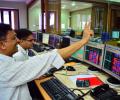
From the Sensex basket, JSW Steel, Tata Steel, UltraTech Cement, NTPC, Larsen & Toubro and HDFC Bank were the major gainers. Titan, Nestle, Bharti Airtel and IndusInd Bank were among the laggards.

Bankers said the outlook of M&As in India in 2024, especially in the second half after the Lok Sabha election, seems relatively better.
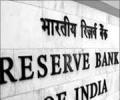
The central bank may classify them as foreign-owned Indian banks.

Debt-oriented funds or monthly income plans with a small portion of the portfolio invested in equities can be good options.

Investors may have to wait a little longer for Unified Payments Interface (UPI)-based block mechanism in the secondary market even as the market regulator has set the effective launch date as January 1, 2024. Several brokerage firms said they may take a few months more to implement it. Investors will be able to register for this facility only if the stock broker has opted for the UPI block facility.

Among Sensex shares, Tech Mahindra, Infosys, Asian Paints, ICICI Bank, Kotak Mahindra Bank, Titan, IndusInd Bank and Bajaj Finserv were the major laggards. Nestle, Tata Steel, Mahindra & Mahindra, Bajaj Finance, HDFC Bank and Tata Consultancy Services were among the gainers.

In the Sensex pack, Asian Paints, Larsen & Toubro, Titan, IndusInd Bank, Bharti Airtel, Power Grid, Bajaj Finserv, Infosys, HDFC Bank and HDFC were the major laggards. On the other hand, Axis Bank, Tata Motors, ITC, State Bank of India, Tata Steel and Sun Pharma were among the gainers.
Among the Sensex firms, Power Grid, UltraTech Cement, Titan, Reliance Industries, Bajaj Finance, Mahindra & Mahindra, ICICI Bank, Tata Consultancy Services, Tech Mahindra, ITC and HDFC Bank were the major laggards. HCL Technologies, IndusInd Bank, Wipro, Nestle, Maruti, Larsen & Toubro and Asian Paints were among the gainers.
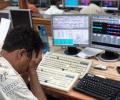
Benchmark equity index Sensex and Nifty gave up early gains and ended lower on Monday as investor sentiment was hit due to unabated foreign fund outflows and losses in index heavyweights Reliance Industries and HDFC Bank. The 30-share BSE Sensex declined 168.21 points or 0.28 per cent to settle at 60,092.97 as 15 of its constituents dropped. The barometer opened higher and touched a high of 60,586.77 in morning session. Later in the day, it fell 297.35 points or 0.49 per cent to 59,963.83.

Coming down heavily on MF players who in recent past chose to use shareholder fund to buy out debt of bleeding invested companies, Sebi said MFs can't have standstill agreements with companies and will take action against fund houses for such deals.

'The deal pipeline across products is robust for 2024.'
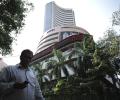
Money flowing into the equity schemes of mutual funds is back at a level last seen before the 2008 financial crisis, when the stock market tanked 60 per cent.
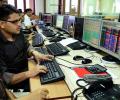
Among the Sensex firms, Infosys, Tata Motors, HDFC Bank, Asian Paints, Tech Mahindra, HDFC, Tata Consultancy Services, Sun Pharma and ICICI Bank were the biggest winners. On the other hand, PowerGrid, NTPC, Nestle, UltraTech Cement, State Bank of India and ITC were among the laggards.
A study of the top ten mutual funds' equity portfolios as on March 30 reveals that funds bought huge chunks of metal major SAIL, engineering stock KEC Infrastructures, while diluted their exposure to FMCG major ITC.

While Paytm (One97 Communications) is not completely past regulatory hurdles, its share price has gained in the last month or two. The Paytm handle migration is complete along with FDI clearance necessary for the Payment Aggregator (PA) license. UPI consumer data indicates stable market share, and expansion in partner networks in financial distribution. All this implies Paytm could be set to meet guidance of turning Adjusted Ebitda breakeven by Q4FY25 (ex of UPI-incentives).

Benchmark equity indices continued their record-shattering spree on Tuesday, with the Sensex and Nifty hitting their fresh all-time high levels in early trade, amid persistent foreign fund inflows. Also, buying in Bajaj Finance, Bajaj Finserv, Tata Consultancy Services and HDFC twins added to the positive market momentum. Rallying for the fifth straight session, the 30-share BSE Sensex jumped 381.55 points to hit its all-time peak of 65,586.60 in early trade.

IPOs inherently carry more risks than stocks that have been listed on the exchanges for some time.

'If individual stocks start falling 25% to 30% or more, then I doubt how many of them will be able to withstand that (kind of selloff). That is when you'll see panic coming in.'

In the 52 newly listed companies since 2014, fund managers have a total investment of a mere 2.5 per cent of their assets under management.

Investors' wealth fell by Rs 2.89 lakh crore in two days of market fall, with the BSE Sensex tumbling 796 points on Wednesday, amid weak global market trends ahead of the US Federal Reserve's interest rate decision. Fresh foreign fund outflows and caution ahead of a host of interest rate decisions from global central banks also added to the overall bearish trend. Besides, the US Fed meeting, the BoE (Bank of England) and the BoJ (Bank of Japan) are also scheduled to meet this week.

According to industry players, over 50 FMPs have exposure to Zee Group companies.

At the start of 2016, HDFC Bank, Infosys, ICICI Bank, L&T and Axis Bank were the top five picks of fund managers
Mutual funds continued to buy into oil and gas, banking and finance, telecom, and media stocks in April

A 5% increase is expected due to additional interest on approval costs.

The mutual fund industry's assets under management (AUM) have likely breached the Rs 50 trillion mark following a rally in domestic equities this month. The industry's average AUM stood at almost Rs 48 trillion at the end of October. In November, the Nifty50 index has gained about 4 per cent so far, while smallcap and midcap indices have rallied close to 8 per cent.

Nine of the 10 most valued firms faced a combined erosion of Rs 1,87,808.26 crore in market valuation last week, with HDFC Bank and Reliance Industries taking the biggest hit amid an overall weak trend in equities. Last week, the BSE benchmark tumbled 1,538.64 points or 2.52 per cent amid concerns that the US Federal Reserve might raise interest rates further to curb inflation. Fresh foreign fund outflows also dented investor sentiments. Barring ITC, all 10 firms, including Tata Consultancy Services (TCS), Infosys, ICICI Bank and Hindustan Unilever, were the laggards.

Nikunj Saraf, Vice President Choice Wealth, answers your queries.
Bajaj Finance led the Sensex gainers' chart, spurting up to 2.38 per cent, followed by Bajaj Finserve rising 2.11 per cent and IndusInd Bank closing 1.66 per cent higher. Bharti Airtel, SBI and L&T increased by 1.60 per cent, 1.28 per cent and 0.92 per cent, respectively.

Benchmark equity indices Sensex and Nifty rebounded from early lows to settle higher on Wednesday following buying in Reliance Industries, Larsen & Toubro and ITC and positive trends in Asian and European markets. The 30-share BSE Sensex rose by 173.22 points or 0.26 per cent to settle at 66,118.69. The index opened lower and fell further to a low of 65,549.96 in morning trade.

Equity investments are fruitful over the very long 20-year term.
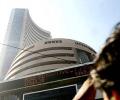
In a live chat on rediff.com held on Friday, July 11, well-known equity specialist Devang Mehta discussed what effect the Budget will have on the stock markets -- from how NOT to lose money in the markets to which are the safest stocks.
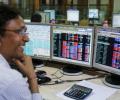
Among the Sensex firms, JSW Steel, Titan, Tata Steel, Sun Pharma, Reliance Industries, Bharti Airtel, Tata Motors and HDFC Bank were the biggest gainers. NTPC, Tech Mahindra, Maruti, State Bank of India and Larsen & Toubro were among the laggards.

The total number of unique investors directly investing in the stock market has surged to 80 million for the first time, with the latest 10 million additions taking place in just eight months, according to data shared by the National Stock Exchange (NSE), the country's largest bourse. "The 80 million unique PAN (permanent account number) investors correspond approximately to around 50 million unique households in India amounting to around 17 per cent households directly investing in the Indian stock market via NSE's extensive nationwide network of trading members," said the exchange. In 2021, the number of domestic households were pegged at 300 million.

Hospital chain Aster DM Healthcare's plans to sell its Gulf business may run into rough weather with voting advisory firm Institutional Investor Advisory Services (IiAS) raising concerns over the transaction. Recommending an 'against' vote on the resolution, IiAS has said there is no clarity on how Aster DM will utilise the proceeds that it will obtain by selling the unit, which contributes to bulk of its revenues. In November, Aster DM had announced its plans to sell its wholly-owned subsidiary Affinity Holdings, which conducts business in the Gulf Cooperation Council (GCC) region, to Alpha GCC for $1 billion.

Monday's steep fall turned Sensex's yearly returns to - 2.57%, but only two large-cap funds did worse.
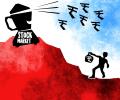
The Sensex jumped nearly 900 points and the Nifty rallied over 272 points on Friday, bouncing back from the previous day's fall, following a positive trend in global equities and fresh foreign fund inflows. The BSE Sensex rallied 899.62 points or 1.53 per cent to end at 59,808.97 after starting the trade on a positive note. During the day, it jumped 1,057.69 points or 1.79 per cent to 59,967.04.
From the Sensex pack, Bajaj Finance tanked 7.21 per cent. The other major laggards were Bajaj Finserv, ICICI Bank, Infosys, Titan, Power Grid, Axis Bank, HDFC Bank, Tech Mahindra, Wipro and Bharti Airtel. ITC, Hindustan Unilever, NTPC, Mahindra & Mahindra, Nestle and Larsen & Toubro were the major winners.
